Printed from Kezuriba (kezuriba.net/en/troubles/material-copper/)
Copper and copper alloy quirks
Material-specific problems TurningMillingDrillingTappingReaming
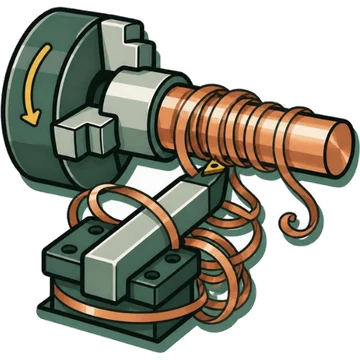
Check first
- Soft and ductile, so welding tends to degrade the finished surface
- Soft and heavy, so beware of deflection when machining on a cantilever
- Internal threads tend to shrink from elastic recovery
Try first
- Choose sharp tools (for copper, aluminum, or stainless steel, or coated products)
- For taps, consider oversize
?Likely causes
✓Fixes
Tool
↔Related problems
Stainless steel quirks (work hardening, welding, boundary wear)Aluminum alloy quirks (welding, built-up edge, chips)Titanium and titanium alloy quirks (heat, welding, ignition)Cast iron quirks (powdery chips, edge chipping, black scale)Hardened steel (high-hardness steel) quirksHeat-resistant alloy (Ni-base alloy, etc.) quirksMagnesium alloy quirks (chip ignition)Mild steel (low-carbon steel) quirks
📚Sources
Causes and fixes are summarized in our own words from cutting-tool makers’ troubleshooting guides and technical data. “Agreed by 2+ makers” means two or more makers say the same thing.
- Mitsubishi Materials — Workpiece material applications: N series mmc-carbide.com
- OSG — Tool Communication Series No.6 Taps, "12. Troubleshooting in tapping operations," pp. 59-62 osg.co.jp
- OSG — Series No.34 High-speed synchro taps, "8. Troubles and countermeasures," pp. 28-29 osg.co.jp
- OSG — Machining C1100 (tough pitch copper) faq.osg.co.jp