Printed from Kezuriba (kezuriba.net/en/troubles/material-heat-resistant/)
Heat-resistant alloy (Ni-base alloy, etc.) quirks
Material-specific problems TurningMillingDrillingTapping
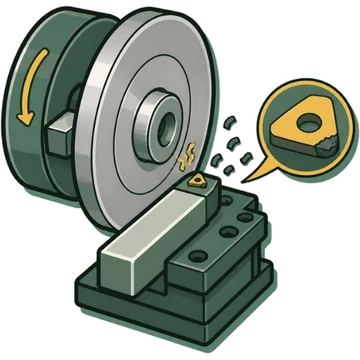
Check first
- Cutting force is high and thermal conductivity is low, so heat accumulates at the cutting edge
- Heat remains at the cutting edge, so heat-related troubles tend to occur
- Boundary wear is the main damage, and burrs tend to occur
Try first
- Keep the cutting speed low. However, reducing the feed too much causes work hardening
- Select a sharp edge geometry and a heat-resistant tool material
- Do not force chips to curl (cutting force rises)
?Likely causes
✓Fixes
Cutting conditions
- Keep the cutting speed low. However, reducing the feed too much causes work hardeningOne maker[2]
Tool
↔Related problems
Stainless steel quirks (work hardening, welding, boundary wear)Aluminum alloy quirks (welding, built-up edge, chips)Titanium and titanium alloy quirks (heat, welding, ignition)Cast iron quirks (powdery chips, edge chipping, black scale)Hardened steel (high-hardness steel) quirksMagnesium alloy quirks (chip ignition)Copper and copper alloy quirksMild steel (low-carbon steel) quirks
📚Sources
Causes and fixes are summarized in our own words from cutting-tool makers’ troubleshooting guides and technical data. “Agreed by 2+ makers” means two or more makers say the same thing.
- Mitsubishi Materials — Workpiece material applications: S series mmc-carbide.com
- OSG — Why are cutting speeds for heat-resistant alloys lower than for other workpiece materials? faq.osg.co.jp
- Sandvik Coromant — Milling troubleshooting sandvik.coromant.com
- OSG — Key points for selecting end mills for heat-resistant alloys faq.osg.co.jp